In an automotive workshop, safety and order are just as important as the quality of the work. Paints, solvents, oils, degreasers and other chemical products are used on a daily basis, and part of the incidents (spills, accidental mixtures, evaporation or contamination) originate from a detail that often goes unnoticed: the packaging. Metal containers are common due to their resistance and the protection they offer to the contents, but for them to work as they should, it is essential to follow good practices for use, closure, storage and disposal.
Here is a clear and practical guide to apply in the day-to-day running of the workshop to improve safety, cleanliness and efficiency.
Selection and pre-screening of metal containers
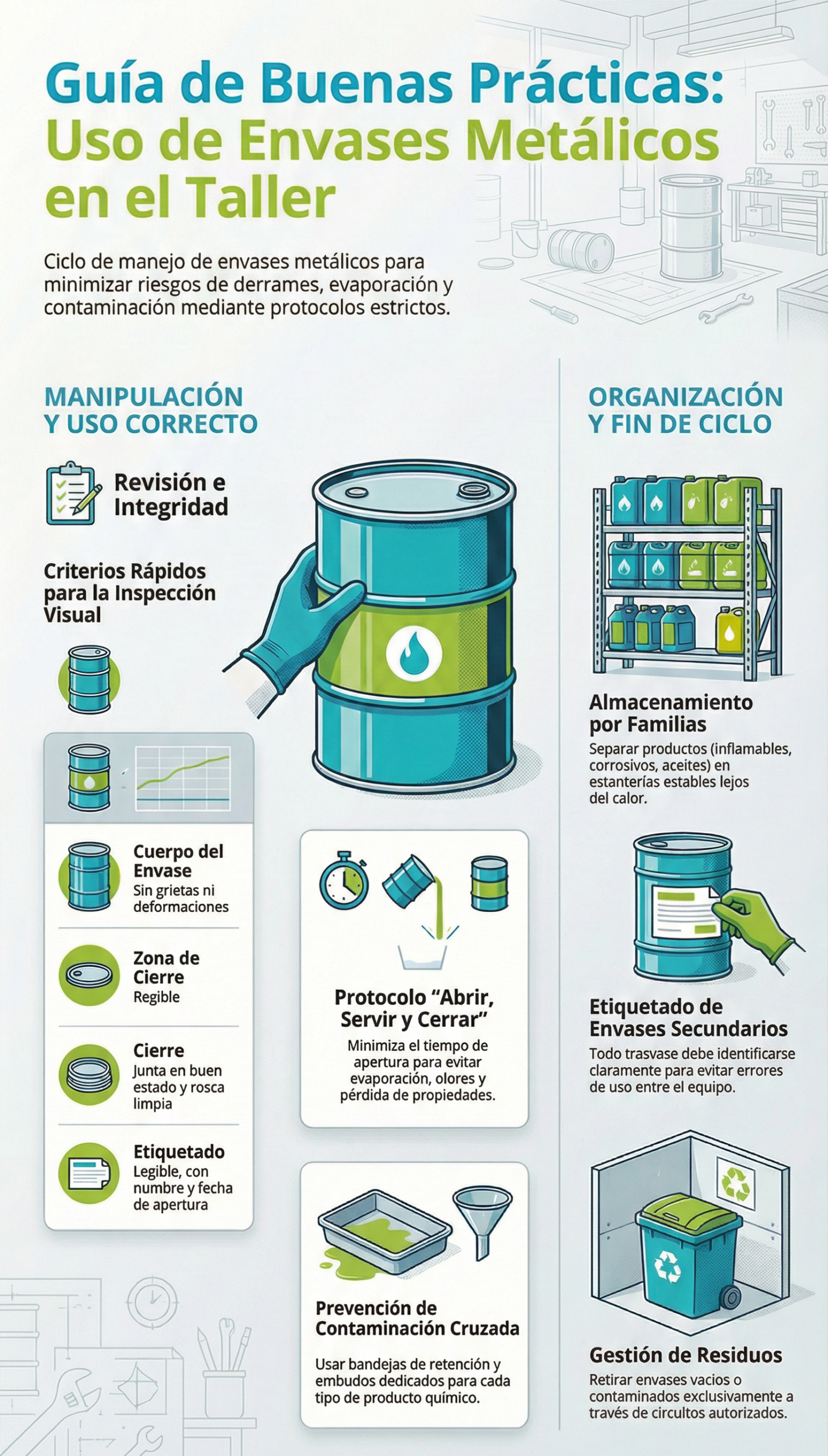
Before opening, transferring or moving any container, check the condition of the container. A blow to the closure area, a dent in the base or signs of rust can compromise the seal and cause leaks over time. It is also advisable to confirm that the container is suitable for the product: not all contents behave in the same way (volatility, viscosity, sensitivity to humidity, etc.).
In a quick check, check the following:
- Package integrity: no rust, cracks, critical dents or deformations.
- Sealing area: thread and cap undamaged; gasket (if applicable) in good condition.
- Compatibility of contents: container suitable for the type of product and its intended use.
When working with metal packaging manufacturers, ask for information on compatibilities and recommendations for use (closures, seals, material strength and storage conditions). Making the right choice from the start reduces errors, waste and risk.
Opening and decanting: control to avoid leakage and cross-contamination
Open the container in a ventilated area and, if possible, on a tray or surface that allows drips to be contained. For transferring, use funnels, pumps or dispensers when the product allows it: you reduce splashing and prevent the liquid from wetting the thread or the cap.
To minimize transfer failures, apply these practices:
- Open and handle on holding tray or easy to clean surface.
- Use specific funnels/dosers by product type.
- Avoid mixing utensils between different liquids: reduces cross-contamination.
- Close the container between uses, even if it is “just for a minute”.
Correct closure: the difference between a safe package and a hidden problem
Metal containers are valued for their robustness and for providing an effective barrier to shocks and light, but this advantage is lost if the closure is not well seated. After serving, clean the rim for debris, check that the gasket (if applicable) is in good condition and close tightly without forcing. A poorly fitted closure can cause micro-leakage, persistent odor, evaporation and loss of product properties.
As an internal practice, it establishes a simple rule: “open, serve and close”. The less time a container remains open, the lower the risk.
Workshop storage: stability, segregation and conditions
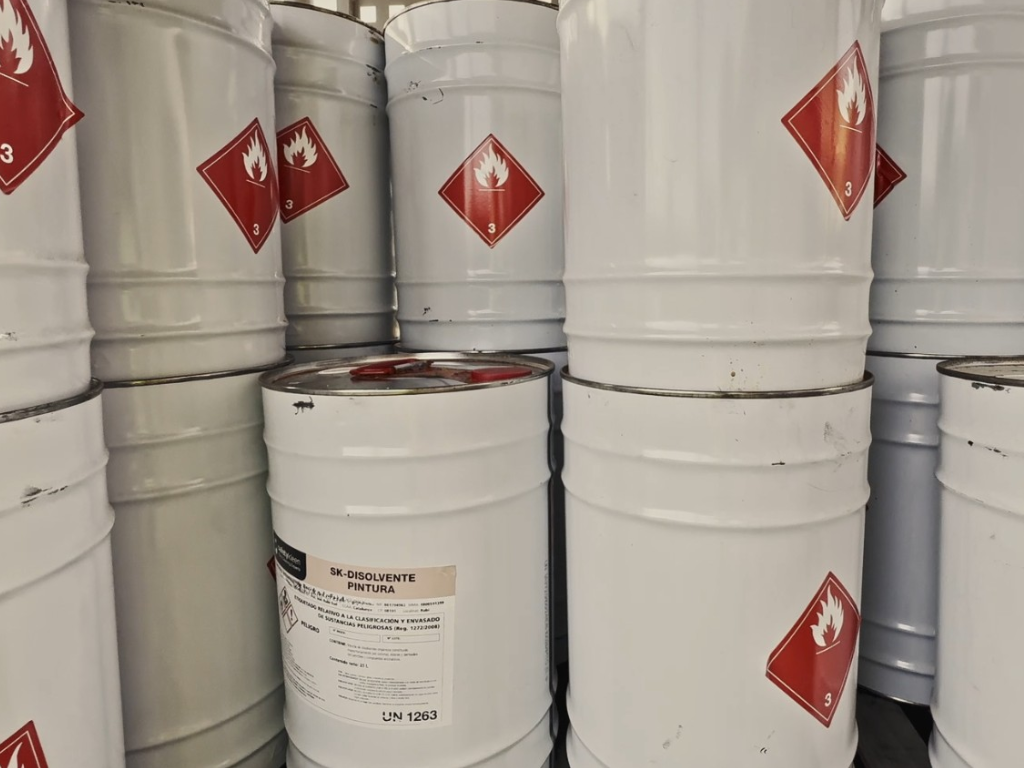
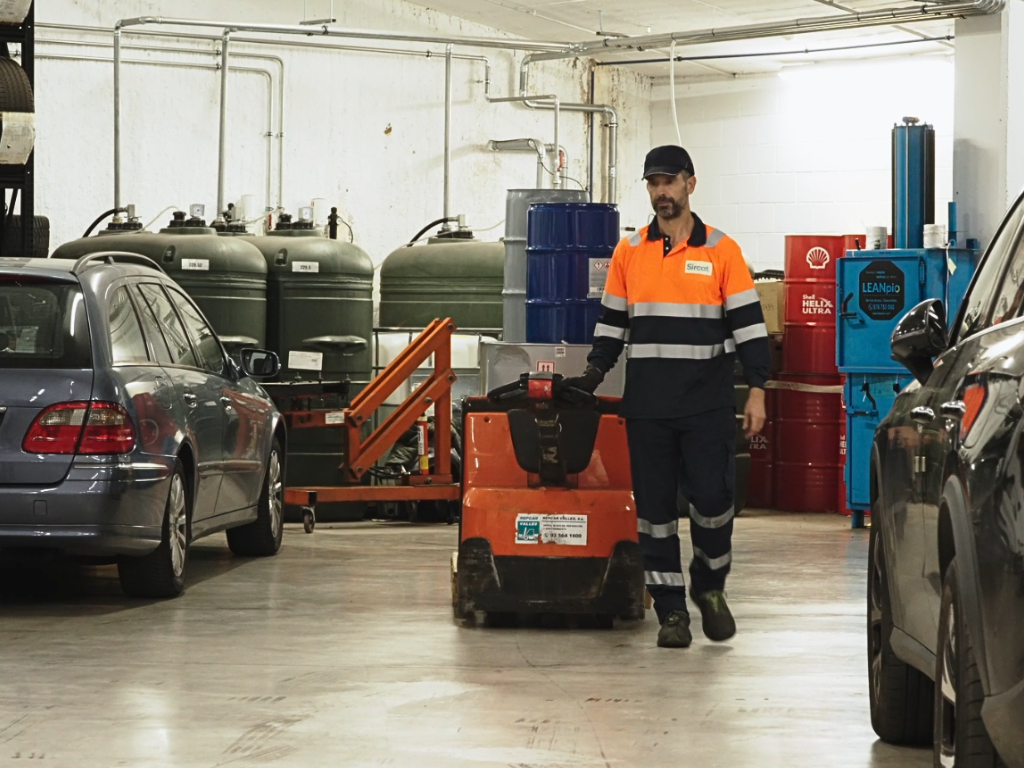
Proper storage improves safety as well as daily operations. Keep containers on stable shelves, avoiding passage areas or near heat sources. Separate by product families (flammables, corrosives, paints, oils, cleaners) and hazardousness and do not stack if not indicated or if stacking may deform lids and closures.
Controlling humidity and temperature helps both the package and the contents, and favors a longer shelf life of the product. In addition, good organization reduces downtime: material is located more quickly and duplicate packages are avoided by not finding the one that was already in use.
Labeling and marking: clarity for all equipment
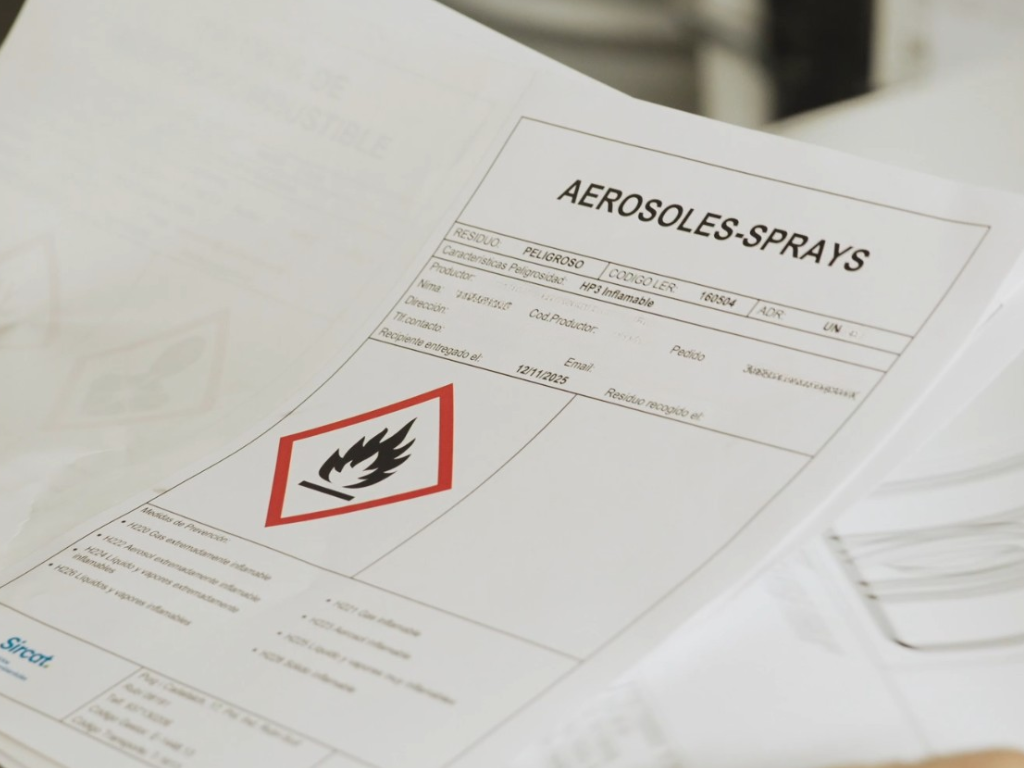
Good labeling avoids errors, especially when there is staff turnover or shifts. Make sure that each container has a clear identification of the contents (no confusing abbreviations), includes the date of opening or preparation when applicable, and shows basic indications for use and internal storage. If you transfer the product to a secondary container, label it as well: the goal is for anyone on the team to be able to act with confidence, without hesitation or guesswork.
Cleaning, maintenance and final waste management
The end of the cycle is as important as the beginning. Do not leave metal containers with open leftovers “for tomorrow”: the product may degrade, evaporate or become contaminated. Keep lids and openings clean to ensure proper sealing and periodically check containers for prolonged use (especially if they are moved frequently).
For empty metal containers or containers with residues, arrange for their removal with an authorized waste transporter and manager. Althoughmetal containers are highly recyclable, in workshop environments they are often contaminated by product residues, so they must follow a specific and appropriate process for their treatment.
Quick checklist to be applied in the workshop
Applying these best practices reduces incidents, improves shop floor cleanliness and helps maintain product quality for longer.
- Container free of bumps, rust and deformations (especially in the lid and mouth).
- Contents identified and label legible + opening date if applicable
- Opening and decanting in ventilated area with drip control
- Separate utensils by type of product to avoid mixing
- Tight sealing and edge cleaning before closing
- Stable storage, away from heat and separated by families
- Waste and empty containers managed by the authorized circuit
If you want to optimize closures, formats or choose the most suitable type of container for your operation, rely on specialized suppliers and manufacturers of metal containers: a small adjustment in the container can translate into a great improvement in safety and efficiency.