Good waste labeling is not a simple procedure: it reduces errors, protects people and the environment, and makes subsequent management faster and safer. It also provides traceability: it makes it clear what the waste is, who is responsible for it and since when it has been stored.
Law 7/2022 on waste and contaminated soils for a circular economy establishes what the initial producer or other holder must do from the time the waste is generated until it is delivered to a manager, focusing on four points: storage, mixing, packaging and labeling. This framework seeks to prevent risks (accidental or due to mishandling) and to ensure that each waste arrives correctly identified to the waste manager. In this regard, we analyze below how to prepare a clear and legible label according to regulations.
What a label should contain
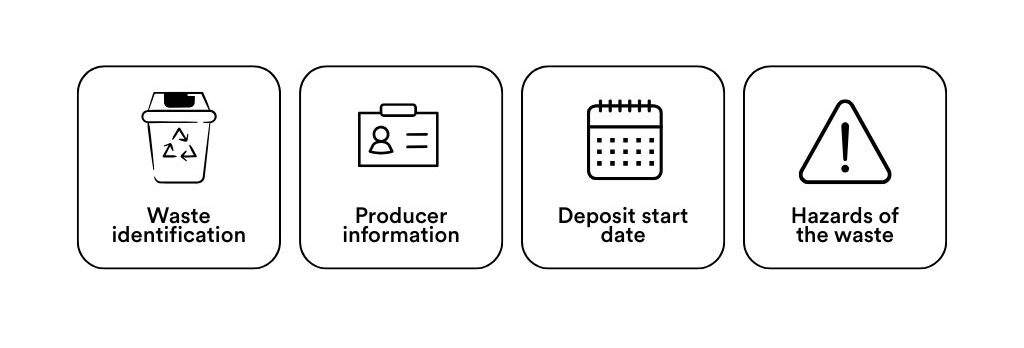
The formal and detailed labeling obligations (pictograms, producer data, date of deposit, size, etc.) specified in the law refer to hazardous waste. For non-hazardous waste, the main obligation of the producer is to identify it according to the European Waste List (EWL) before delivery. On the contrary, hazardous waste must be clearly labeled with the following mandatory information:
What waste are we treating
The official waste code, complete name according to the current list and description of the waste must be clearly identified.
Who produces or owns it
Clearly indicate the name, NIMA, address (postal and e-mail) and telephone number of the responsible company/facility. The NIMA is the environmental identification number of the facility. Check that the data is up to date and legible.
When the deposit begins
The start date of the deposit is a key date for counting deadlines. It indicates the exact day on which the waste is first stored and is the date that starts the counting of maximum storage periods. If you change the waste container, transfer the date to the new label.
Remember that it is mandatory by law to store hazardous waste for a maximum of 6 months, non-hazardous waste for 2 years if it is intended for recovery and 1 year if it is intended for disposal.
What are the dangers of
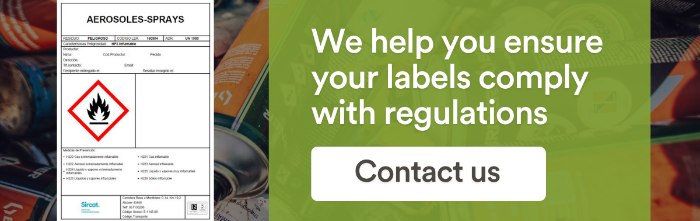
Hazards are mandatorily indicated by CLP Pictograms. A hazard pictogram is an image on the label showing a warning symbol and specific colors to indicate the risks that a substance or mixture may cause to health or the environment (corrosive, flammable, toxic, etc.). These symbols should always appear clearly on the label and, if possible, in color.
How to place the label correctly
The label is the “visible face” of the waste. It must be clear and visible. Below, we show how to place it to comply with these criteria and with Law 7/2022:
- Attachment and cleaning: Attach securely and remove previous labels that may mislead as to origin or contents. If reusing containers, cover or remove any old labels before attaching the new one.
- Language and legibility: Ensure that it is at least in Spanish, is readable at a glance and does not rub off with use (it must be indelible). Avoid stains or creases and check the contrast between text and background.
- Location and visibility: Place it in a smooth and visible area of the package, without wrinkles or overlaps. Avoid areas that are lost when opening/closing the container.
- Size: 10 × 10 cm minimum for easy reading from a distance. If the container is small and does not fit, use the direct marking alternative (see next point).
- Preservation and replacement: If the label becomes damaged or no longer legible, replace it immediately to keep the information visible and permanent.
- Container changes: If you change the waste, make sure that the new container carries the same information and transfer the start date of the deposit to the new label.
- Exception (direct marking): No separate label is required if the inscriptions are clearly marked on the container and meet all mandatory requirements.
In conclusion, clear, legible and indelible labeling is the practical guarantee of compliance: it identifies the waste, points out its hazards and records the person responsible and the start date. The essential thing now is to maintain it: replace damaged labels, cancel old ones and check at every movement that the information is complete and the pictograms are correct. Making this review a short habit avoids confusion and rejections and maintains traceability throughout the process. If the label is right, everything else – collection, transport and treatment – flows.