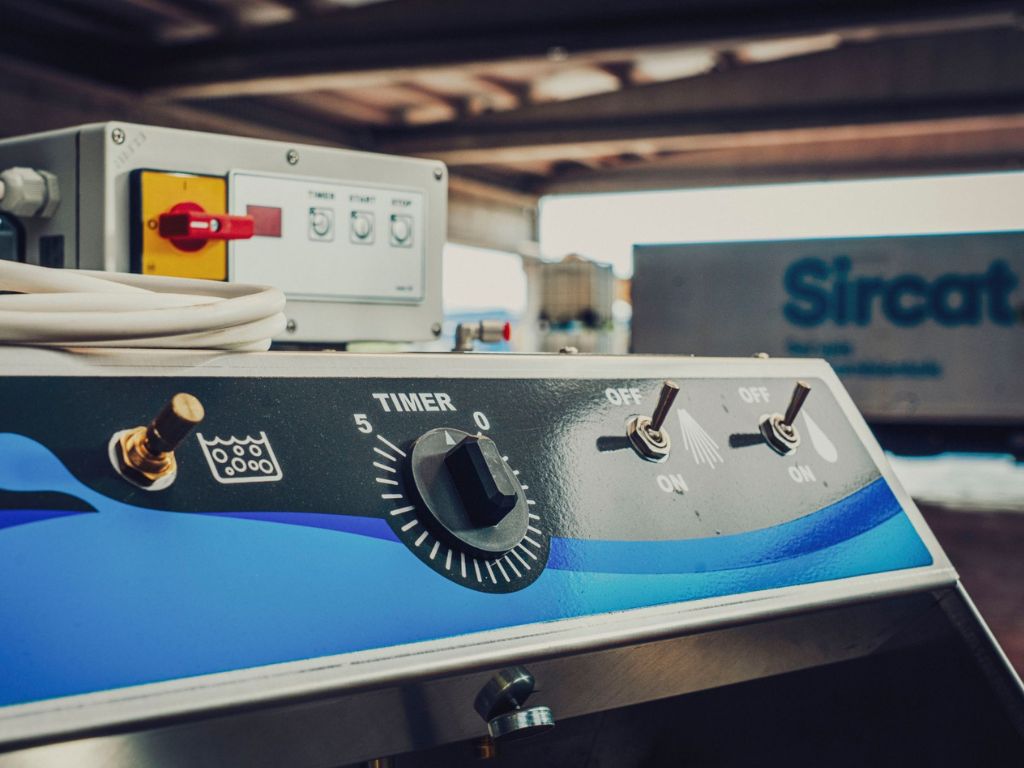
Having up-to-date car wash equipment is not an extra: it is key to the quality of the work and the safety of the personnel.
Good washing avoids contamination in assembly and paint, extends the life of parts and guns and improves part cleanliness. It also optimizes shop cleaning processes, reinforces gun maintenance, organizes shop waste management, boosts VOC (volatile organic compounds) reduction and reinforces environmental compliance in the shop, in line with current regulations(Royal Decree 1457/1986 and Royal Decree 948/2003).
In a competitive environment, the right industrial cleaning equipment helps to clean right the first time, save time and control costs.
Why upgrade your laundry equipment?
In many workshops, washing is solved with manual methods or old equipment. This involves long cycles, high consumption and exposure risks. Upgrading to a modern, upgraded wash system with cycle control, recirculation and improved safety measures provides more process control, consumption savings and environmental compliance. Making the leap to a parts washer or automatic system within a family of industrial cleaning equipment usually means less rework and shorter cycle times.
What a modern system gives you:
– Better quality: Clean parts the first time, no surprises in assembly or painting.
– Faster and more economical: Shorter cycles and lower consumption.
– Safer: Less exposure of personnel to products and vapors.
– More responsible: Simplified shop floor waste management and easier shop floor environmental compliance.
Types of car wash equipment for machine shops and key selection criteria
Choose the technology that really works for you: Aqueous with hot water or solvent controlled. Adjust the equipment to your rhythm and take care of safety and compliance. We tell you, step by step, how to combine chemistry and material, check performance and sort out the environmental part:
Compatibility with dirt/materials
- For grease and oil, it usually works best to wash with hot water and detergent. If you need to remove paint or varnish, use specific products and keep the equipment closed to avoid vapors.
- In bodywork, it incorporates clear procedures for washing paint spray guns to ensure clean lines and nozzles at all times.
- On aluminum and light alloy parts, avoid very strong products and high temperatures, and with plastics and rubbers, do a small test first.
Always validate with a real part and check three things for consistent part cleaning: how long it takes to get clean, that no marks or discolorations appear, and how much each wash costs. Take the opportunity to check the maintenance of guns and tooling associated with the process.
Efficiency and safety
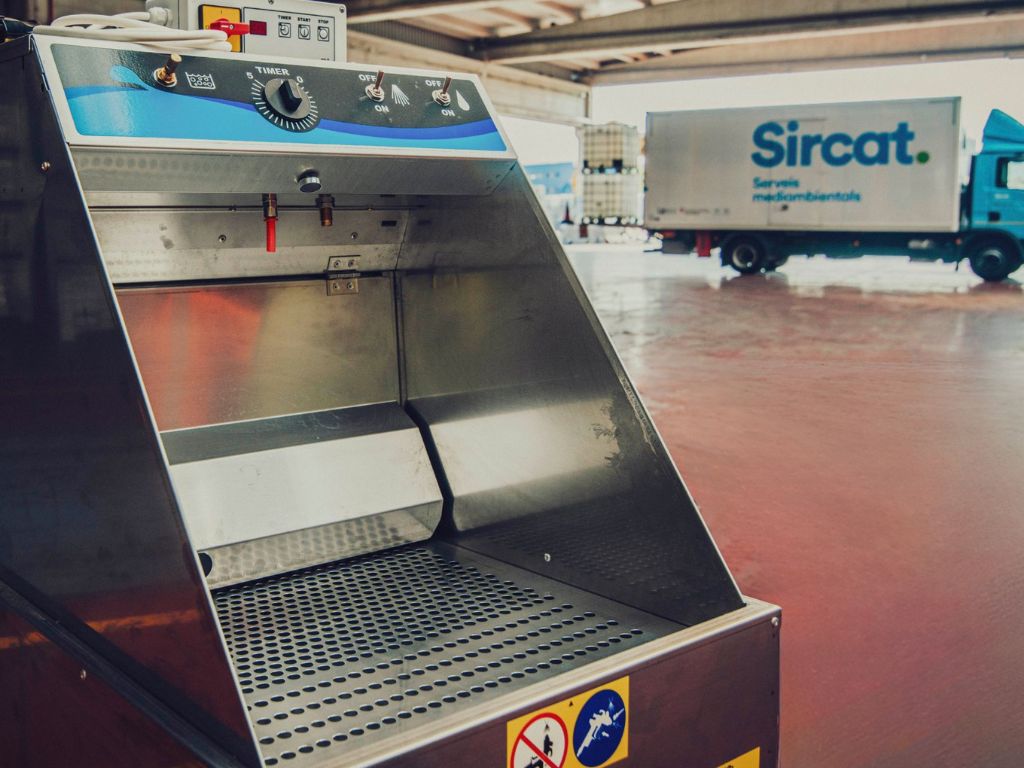
Manual parts washers provide flexibility and lower investment; automatic parts washing (spray or immersion) provides repeatability and reduces handling. Remember to ensure extraction, a comfortable loading height and access to filters/pumps. Verify that the largest part fits, that the equipment reaches the necessary flow rate and that maintenance can be done in less than 15 minutes without increasing operator exposure.
Environmental compliance
Separate water liquids from solvent liquids. Store them in suitable containers with a clear label and always keep them covered in a ventilated area. It is important to record each removal with the company that collects the waste and to schedule periodic inspections: change the liquids when necessary, clean the filters and check for leaks. To waste less, always use the lid and reuse the product when you can by cleaning it. Also, filter or let the water stand to extend its use. Finally, work with the lowest temperature that works and above all train your team in the use of the equipment.
These guidelines consolidate efficient waste management in the workshop and facilitate environmental compliance in the workshop.
Good workshop practices
Applying good practices makes flushing a predictable and safe process. These guidelines extend bath life, improve quality and reduce consumption. They also minimize risks to equipment and simplify audits and controls. Below, you’ll see concrete actions to implement in your shop or industry today:
- Establish routines that extend the life of the bathroom, reduce consumption and keep your space safe.
- Classify the parts according to the level of dirt so as not to mix paint with grease.
- Performs mechanical pretreatment to save time.
- Work with the lowest temperature that cleans well.
- Filter and reuse whenever possible.
- Controls vapors with closed lids and ventilation.
- Bath change and filter cleaning program.
- Includes maintenance checks of paint spray guns to ensure stable fans and avoid defects in the finish.
At Sircat we design a safe and efficient washing process with you: we choose the equipment, install it and provide ongoing support to operate at lower costs.
As specialists in car wash equipment for mechanical workshops, we work with a wide range of solutions that optimize cleaning processes and parts cleaning, including hot water options for efficiency. We collaborate with leading manufacturers to cover everything from general mechanics to body shop and precision applications, with up-to-date and reliable technology. We take care of transportation, installation and commissioning and accompany the operation with preventive maintenance programs.
Remember that choosing the right car wash equipment has a direct impact on the quality, productivity and compliance of your business. The goal is to make your wash predictable, safe and profitable.