In automotive workshops, motorcycles, machinery and small industries, used oil filters appear on a daily basis and often accumulate without a clear pattern. Although they may seem harmless, they contain hydrocarbons and metallic particles from the engine and are therefore considered hazardous waste and require specific management.
We explain, with a practical approach and based on current Spanish regulations, why they pose an environmental risk and how to organize them in your workshop to comply and avoid penalties: from temporary storage and labeling, to documentation and collection with an authorized manager.
What is a used oil filter and why is it dangerous?
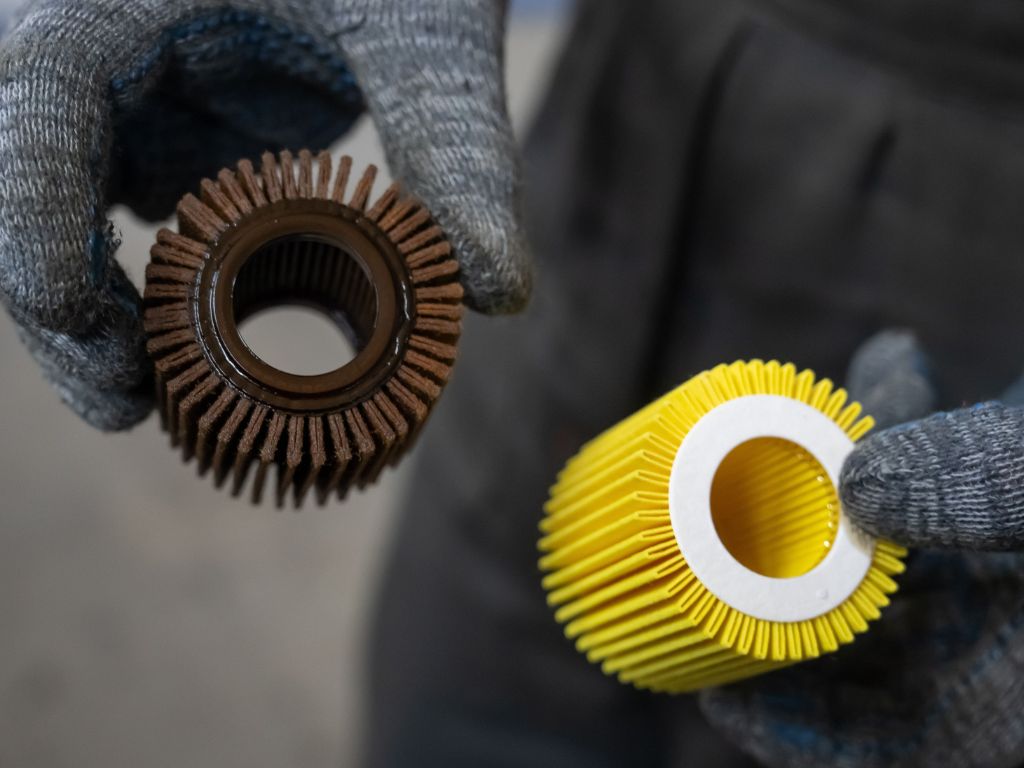
Filters retain metal particles and oil residues during the operation of engines and machinery. When disposed of, they remain impregnated with used oil and metals (e.g. lead, zinc, copper). This can lead to soil and water contamination, emission of hazardous compounds and fire hazard. They are therefore considered hazardous waste and require specific management. A single poorly stored filter can leak for weeks, permeating the soil and extending the reach of the spill. If punctured or compacted, the retained oil can be released suddenly and fuel a fire and generate toxic fumes, so they should never be thrown away with scrap metal or stored without a bucket and a tight lid.
Legal framework in Spain and the EU
For contextualization, the legal framework that applies to oil filters in Spain is as follows:
- In the workshop the basic rule is to separate, label and keep control, keeping the filters in differentiated containers with a visible label (LER code, date and producer) and recording inputs and outputs in the chronological file.
- The Law 7/2022 establishes the obligations of the producer to prevent, segregate and deliver to an authorized manager, in addition to maintaining the chronological file and keeping the documentation for the legal deadlines.
- When the filters leave the workshop, the RD 553/2020 regulates the transfer of waste: it requires a tracking sheet for each removal and prior notification to the administration.
- Because of its link to waste oils, the RD 679/2006 reminds us that impregnated filters must be stored without dripping, avoiding spills and prioritizing recovery over disposal.
In addition, road transport is governed by ADR, which implies the use of UN-approved packaging, correct labeling and compliance with specific safety measures during collection and transport. Some autonomous communities may require notifications or procedures through their own platforms, so it is advisable to check the local casuistry before each removal.
Step-by-step management in the workshop
These are the key tasks for managing filters in your workshop: safe removal with PPE, segregation, storage in an approved container with bucket, correct labeling and preparation for collection. We also explain what documentation you should generate and keep to ensure traceability and avoid incidents during inspections.
Safe withdrawal
Drain filter in tray to minimize drips. Use PPE (heavy-duty gloves, goggles, protective clothing). Avoid puncturing or compressing the cartridge; allow to drain for a few minutes and use a drip tray for transfer.
Segregation
Do not mix with other waste if they do not share classification. Keep them separate from absorbents, contaminated packaging and scrap to avoid complicating sorting and making management more expensive.
Temporary storage
Deposit in an approved container, hermetically sealed and with a retention bucket. Place container under roof, on impermeable floor and away from heat sources; check periodically for leaks.
Tagged
Indicate “Hazardous waste”, LER code, producer data and storage start date. Attach the label before storage begins and update it when moving the container or when it is close to its maximum capacity.
In this sense, Sircat provides its customers with labels with all the data required by the regulations. This label will be placed on the corresponding container for the correct segregation of this waste and will be changed at the next collection, always keeping updated the date of the last collection, which should not exceed 6 months as it is a hazardous waste.
Collection with authorized manager
Scheduled or on demand. Plan the frequency according to your volume (monthly or quarterly) and check ADR and Identification Document before removal. It is recommended to schedule hazardous waste collection every six months.
Traceability
Retain contract/accession, identification document and proof of treatment in the chronological file. Verify that quantities, Tracking Sheet and LER codes of the DI match your record and keep the documents for the legal deadlines.
Temporary storage and security
The filter storage area is the workshop’s first line of defense: order, cleanliness and visual control make the difference between a safe operation and an incident. Establishing simple routines reduces costs, avoids odors and puts any inspection on your side.
The table below summarizes the minimum storage requirements: container and bin type, location, signage, PPE and emergency response.
| Aspect | Practical requirement |
| Container | Metal/plastic, UN approved, watertight lid |
| Retention | Bucket with capacity ≥110% of the largest container |
| Location | Ventilated, waterproofed and roofed area |
| Signage | Pictograms, “Hazardous waste”, LER code |
| PPE | Chemical gloves, goggles, safety footwear |
| Incompatibilities | Do not mix with absorbents/other wastes except common classification. |
| Emergencies | Spill kit, fire extinguisher, procedure for action |
Properly managing used oil filters is not optional: they are hazardous waste that, if mishandled, pollute, generate fire hazards and expose you to penalties. Compliance not only avoids fines: it also protects your equipment and the environment, reduces cleaning costs and minimizes downtime due to incidents. Orderly management improves your shop’s image, facilitates audits (e.g. ISO 14001) and prepares you for smooth inspections.
The key to proper management of used oil filters is to make it a routine: a dedicated and clean area, approved containers with a bucket, visible labels and an up-to-date chronological file. Maintaining this standard is simple if you establish responsible parties, a review frequency and a removal plan according to your volume.
Frequently asked questions about the management of used filters
What is the LER Code and what is the code for used oil filters?
This is the European Waste List, a six-digit system that classifies each waste for management and traceability purposes. An asterisk (*) indicates hazardous waste, which implies specific storage, transport (ADR) and documentation requirements. The LER code for used oil filters is 16 01 07.
Can I drain them and throw them away as scrap?
No. Even if they are drained, they retain oil and hazardous particles, so they are still hazardous waste. Mixing them with scrap metal contaminates the metal and can lead to penalties and rejection at the plant; they must be managed by an authorized manager.
How long can I store them?
Depends on regional regulations and quantities. As an operational guide, schedule monthly or quarterly removals and avoid exceeding 80% of container capacity to minimize risks and odors.
What documents should I keep?
Contract/accession with the manager, Identification Document of each transfer and proof of treatment, in addition to the chronological file. Keep everything for the applicable legal deadlines and try to have a digital copy organized by date and LER code.
Do I need special containers?
Yes: UN-approved containers with tight-fitting lid and retention bucket. The material must be compatible with hydrocarbons, allow a reliable closure and have a durable and legible label.