In waste management, the identification and classification of waste is a key factor in ensuring that waste is handled efficiently, safely and in compliance with environmental regulations. In this context, LER codes play an important role. In this article we analyze what a LER code is and how it is assigned to a resource, understanding the importance and functionality they currently have.
What is the LER code
The LER code, also known as the European Waste List code, is a classification system used in Europe to identify and classify waste. This list is used to help and guide companies and authorities to manage waste safely and in accordance with current legislation.
Where to see the LER code
All LER codes can be consulted in the European Waste List (EWL) established by the European Union. This designation provides a uniform classification system for all types of waste, ensuring accurate identification and management of waste types in accordance with environmental regulations.
The European Waste List (EWL) is published in Decision 2014/955/EU and is organized into 20 chapters, each corresponding to a waste typology. These chapters are numbered from 01 to 20 and cover a wide range of industrial, commercial and household applications. Each chapter is divided into specific categories and each LER code has six digits, where the first two identify the chapter, the next two the category and the last two the specific waste.
How is waste sorted?
LER waste codes with (*) will be considered hazardous, while those without are considered non-hazardous.
In the list, we can also find some wastes that are identified by LER codes that are called mirror and are those in which, in order to know if the waste contains hazardous substances or not, it is necessary to know the exact composition of the waste, performing an analysis or a basic characterization of the waste.
Importance of the European waste list:
The EWL is essential for several reasons: It provides a uniform classification system for the entire European Union, facilitating transboundary waste management and helping companies and authorities to comply with European environmental regulations. It also facilitates efficient waste management, enabling the correct identification, storage, transport and treatment of waste, while identifying hazardous waste and the appropriate safety measures for its proper management.
List of the most important LER codes
The most common and high impact sectors and types of waste from the list of LER codes are as follows:
Mining and extraction waste (01) and construction and demolition waste (17), as they are bulky and require specific management due to their polluting potential.
- Agriculture and food wastes (02), significant due to their quantity and their influence on public health and the environment.
- Coatings and inks (08), as well as oils and fuels (13), include hazardous substances that require careful handling.
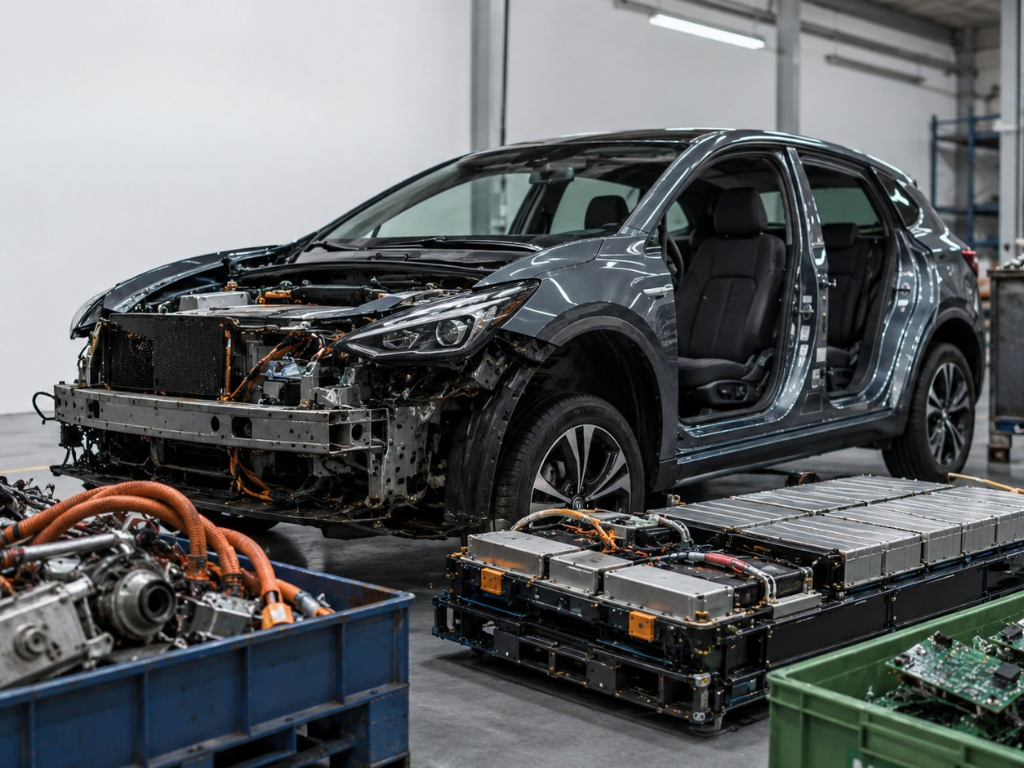
- Waste electrical and electronic equipment (WEEE) (16), which is increasing due to technological obsolescence, contains toxic components.
- Municipal waste (20) is generated by the majority of the population, making its proper management crucial.
- Sanitary wastes (18) are critical because of their infectious or hazardous nature.
Clearly, all types of waste are important, but these chapters especially represent areas where proper waste management is essential to protect the environment and people.
List of LER codes managed by Sircat
Sircat manages waste from practically all existing LER codes, such as WEEE, waste from vehicle repair and maintenance, industrial waste similar to municipal waste, hazardous oil waste, contaminated and non-contaminated packaging, solvents and many others.
In conclusion, the European Waste List (EWL) provides a solid framework for the classification and management of waste in Europe, addressing a wide range of sectors and waste types. Its application enables not only regulatory compliance, but also environmental and public health protection. The correct allocation of LER codes is essential for efficient and sustainable waste management, thus contributing to a cleaner and healthier future for all.
If you need advice on LER codes, Sircat offers an Environmental Consulting service providing customized solutions based on the specific requirements of each client.