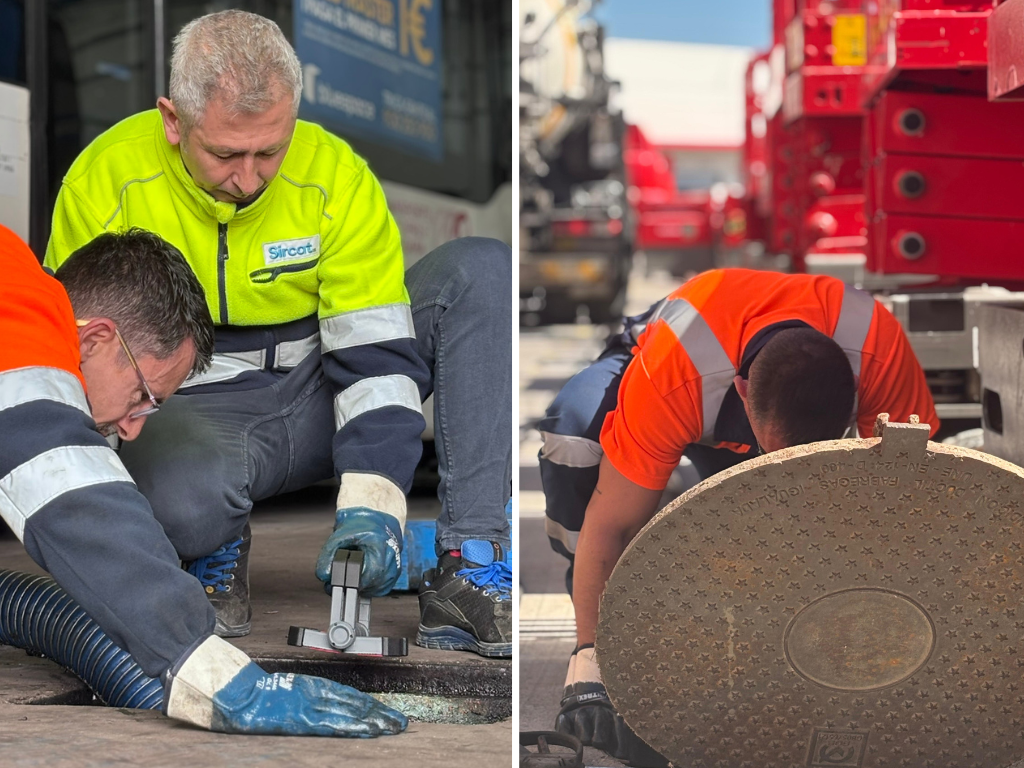
Hydrocarbon water management often goes unnoticed until an incident occurs. In car washes, workshops and centers with washing areas, the hydrocarbon separator is a key element in keeping operations under control.
When its emptying and cleaning is delayed, the problem can evolve quickly: bad odors, slow drainage, sludge accumulation, blockages, unforeseen costs, operational stoppages or contamination of the sewer network. Therefore, detecting the warning signs in time is the best way to avoid emergencies, keep the installation operating normally and avoid environmental pollution.
The 7 signs that your separator needs emptying
Although each installation is different, there are symptoms that tend to recur when the separator starts working at its limit. Detecting them in time allows action to be taken before major incidents occur.
| Signal | What it may indicate |
| Persistent bad odors | Waste accumulation and saturation |
| Slow drainage | Blockages or excess sludge |
| Visible debris | Lack of preventive maintenance |
| Repeated failures | System working at the limit |
| Documentary problems | Poorly planned management |
| Frequent emergency recalls | Lack of planning |
| Too many suppliers | Lack of coordination and control |
Persistent bad odors in the washing area
When the system accumulates too much sludge, residues or hydrocarbonated water, intense and persistent odors start to appear near grids, manholes, pipes or the washing area itself.
Many companies end up normalizing this odor because it appears progressively. However, it usually indicates that the separator is working at its limit and needs maintenance or emptying. If the odor remains constant, it is advisable to check the installation as soon as possible.
Water drains more slowly than usual
At first it may seem like a minor problem, but it is usually a sign of internal waste buildup or system saturation. Waiting too long can end up causing complete blockages or even overflows.
Visible sludge and debris appear frequently
Excessive sludge accumulation usually indicates that the separator is no longer functioning properly. In many cases, this occurs because preventive maintenance or wastewater removal has been delayed longer than recommended. In addition to the operational impact, this buildup can make future removals more difficult, increase the risk of breakdowns, generate more downtime and increase the cost of the intervention.
The sooner action is taken, the simpler and more controlled the management will be.
Small breakdowns and incidents are on the rise
Many apparently isolated incidents have the same origin: poor management of hydrocarbon waters.
| Frequent occurrence | Operational consequence |
| Repeated traffic jams | Loss of time and slowdowns |
| Overflows | Risk of downtime, emergency cleaning and environmental contamination |
| Pump problems | Technical costs and maintenance |
| Unstable drainage | Irregular operation |
| One-time interruptions | Lower productivity |
The separator does not usually collapse all at once. It usually gives an early warning. And detecting these signals allows you to avoid a much more serious incident.
Documentation and revisions are not controlled
Many companies discover the problem just before an inspection or when they need to justify the traceability of the management performed. Having planned waste removals and separator emptying helps not only to keep the facility operational, but also to have up-to-date documentation, avoid administrative errors and reduce risks in an inspection.
Withdrawals are always made on an emergency basis
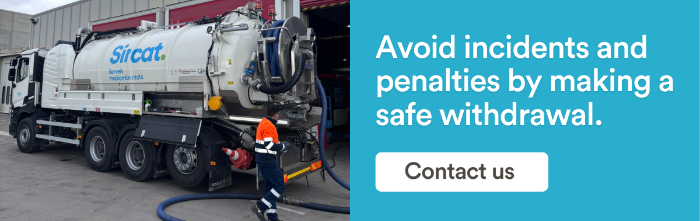
If the separator is only emptied after an incident has already occurred, the system is probably running unplanned. Working only in response to emergencies usually leads to more operational stress, less responsiveness, cost overruns, risk of downtime and more internal complications. Prevention is almost always more efficient and economical than improvising when the problem is already critical.
You have different suppliers for the same management
In many laundries and workshops, the management of waste, water and documentation is divided among several suppliers. This can lead to coordination errors, delays, lack of traceability, more internal management time and less operational control. Centralizing management with a single specialized supplier helps to simplify processes and reduce incidents.
Frequency of emptying and preventive maintenance
The UNE-EN 858 standards recommend periodic inspection and maintenance of the hydrocarbon separator to ensure its correct operation. In many installations, this usually translates into at least a six-monthly removal, although the frequency may vary depending on the use and characteristics of the installation.
| Factor | Impact on emptying frequency |
| Activity volume | More use means more accumulation |
| Type of installation | A workshop does not generate the same as an intensive laundry. |
| Pollution load | Increased presence of waste accelerates saturation |
| Frequency of use | Continuous use requires more control |
| System condition | Deteriorated facilities need further monitoring |
The most advisable is to make a technical assessment and establish a preventive maintenance and hydrocarbon separator emptying plan adapted to each installation.
Planning recalls helps to avoid emergencies, reduce incidents, improve control and maintain operations without interruptions. In addition, working with planned maintenance allows you to anticipate problems and reduce hidden costs associated with last-minute incidents.
FAQS
How often should a hydrocarbon separator be emptied?
There is no single frequency valid for all installations. It depends on the volume of activity, the type of washing, the amount of hydrocarbon water generated and the condition of the system. In installations with heavy use, delaying maintenance can increase the risk of incidents and operational stoppages. It is best to carry out a technical assessment and establish preventive maintenance adapted to each case.
What can happen if I delay emptying the separator?
When a separator works saturated, bad odors, slow drainage, sludge accumulation, clogging or even overflows can occur. In addition to the operational impact, document problems or risks can also arise during an inspection, which can result in penalties from the administration. In many cases, acting late ends up generating more costs than carrying out planned maintenance.
How do I know if my installation needs an urgent recall?
Some common signs are:
- Water draining slowly.
- Persistent bad odors.
- Overflows.
- Visible sludge.
- Repeated incidents in the washing area.
If these symptoms appear frequently, it is advisable to check the condition of the separator as soon as possible to avoid a more serious breakdown.
Is it better to work with one-off withdrawals or with a periodic service?
For most laundries and workshops, regular service is often more efficient and safer than acting only when an emergency arises. Planning helps to reduce incidents, keep documentation up to date and avoid unforeseen costs. In addition, it allows greater control over the operation and traceability of the management performed.