Electronic and electrical equipment has become an essential part of people’s lives and we depend on it for a multitude of daily tasks. Due to this excessive increase in the number of electronic devices, more electronic waste, commonly known as e-waste, is also being produced. This waste accumulates in the form of tons in landfills or recycling centers, thus creating a major environmental problem.
What is electronic waste?
The rapid advancement of technology and the constant launch of new and improved products have accelerated the generation of technological waste, making it one of the fastest growing waste streams in the world. Currently, more than 50 million tons of e-waste are generated annually. If we do not change this trend, it is estimated that we could reach, according to the UN, 120 million tons of e-waste by 2050.
The Organisation for Economic Co-operation and Development (OECD) defines e-waste as any electrically powered device whose useful life has come to an end. Therefore, e-waste refers to all those electronic and electronic devices that have been discarded, because they are broken, outdated or simply wanted to be replaced by newer versions.
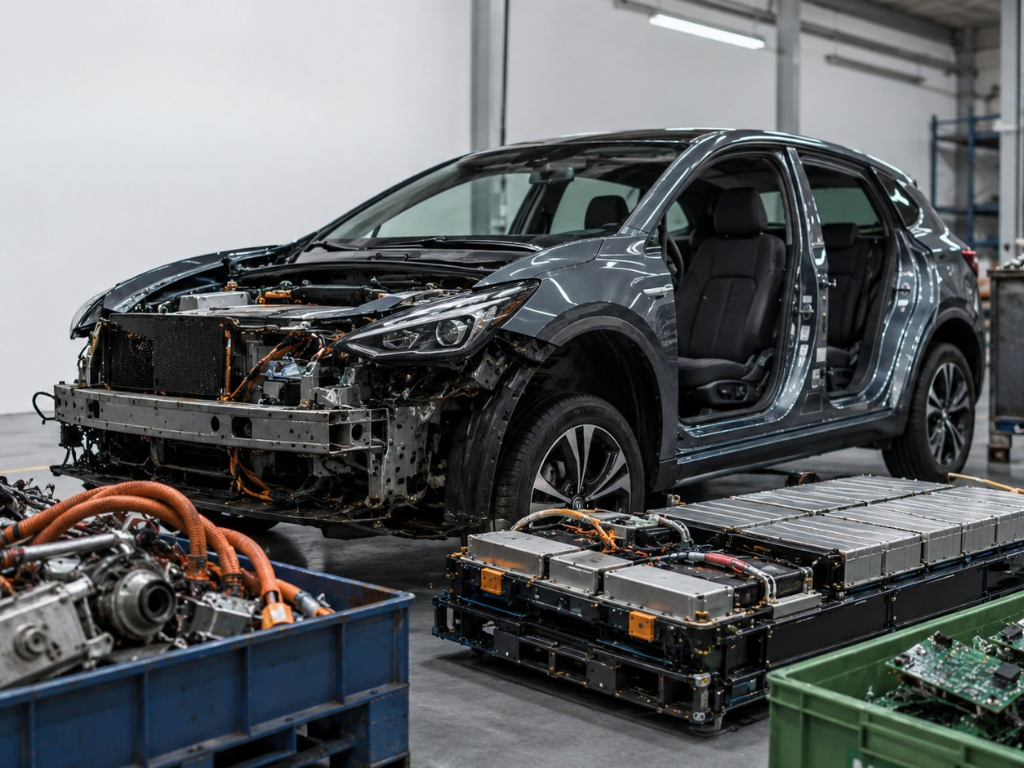
These devices are complex and contain a variety of highly polluting materials that often end up in unexpected places. E-waste harbors hazardous substances such as heavy metals like mercury, lead, cadmium, chromium, arsenic and antimony, which have the potential to cause serious damage to health and the environment. However, they also contain recoverable materials, such as gold, silver, copper and plastics, which can be recycled and reused, promoting circularity. Furthermore, the correct management of e-waste not only helps to reduce the negative environmental impact, but also promotes the need to extract new natural resources.
Types of electronic waste
Within what is considered electronic waste we find not only cell phones and screens, but an infinite number of complex technological products that can be classified into various types depending on the type of device and its function:
Large appliances
In this group we include refrigerators, freezers, refrigeration equipment, washing machines and many other appliances commonly used in households. Their large size makes them difficult to manage.
Small household appliances
In this category we find everyday household appliances such as vacuum cleaners, toasters, coffee makers, irons and many others. They are so widely used and come in so many makes and models that too many of them contribute significantly to the e-waste problem.
Computer and telecommunications equipment
This includes computers, laptops, printers, cell phones, tablets and miscellaneous equipment. These devices contain a large amount of hazardous materials that require proper handling to avoid environmental contamination.
Consumer equipment and photovoltaic panels
They include televisions, screens, cameras, video game consoles and audio equipment. These devices are often replaced frequently due to rapid technological evolution.
Within this category we also find photovoltaic panels which, despite their use as clean and sustainable energy, also generate a specific type of electronic waste at the end of their useful life that must be properly treated, since they contain semiconductor materials such as glass, metal and silicon, among others. In addition, their large size and the amount of boards that are installed in large areas generate large volumes of waste and require specific facilities for their proper treatment.
Lamps
In this group we find fluorescent bulbs, neon lamps and LEDs which contain mercury and other toxic materials.
In this way, we could continue to classify e-waste by many more groups such as electronic toys, vending machines, sports equipment or medical equipment, among many others. Even so, all categories share the same problem: Toxic materials that must be properly managed and many others recoverable through recycling.
Which countries generate the most electronic waste
The main generators of electronic waste worldwide are the United States and the European Union. These regions are known for their high production of electronic devices due to the high level of consumption and the rapid technological obsolescence that drives the constant renewal of equipment.
In addition, emerging countries, such as China, are experiencing a significant increase in e-waste generation. As these countries experience economic growth and require more technology, the demand for electronic devices also increases, contributing to the increase in e-waste production.
This phenomenon reflects a global trend in which economic growth and technological development go hand in hand with an increase in e-waste generation.
Where does electronic waste go
E-waste is often incinerated or landfilled, despite the efforts of the public and waste managers to separate and recycle electronic components. In addition, much of it ends up traveling to landfills around the world, especially those in impoverished countries.
A clear example of this situation is Ghana. Its capital, Accra, is home to a plethora of second-hand markets and an expanding network of repair shops that attempt to salvage functionality from discarded devices. However, among these commercial activities is also a vast landfill of electronic waste, a testament to inequality and the global economy.
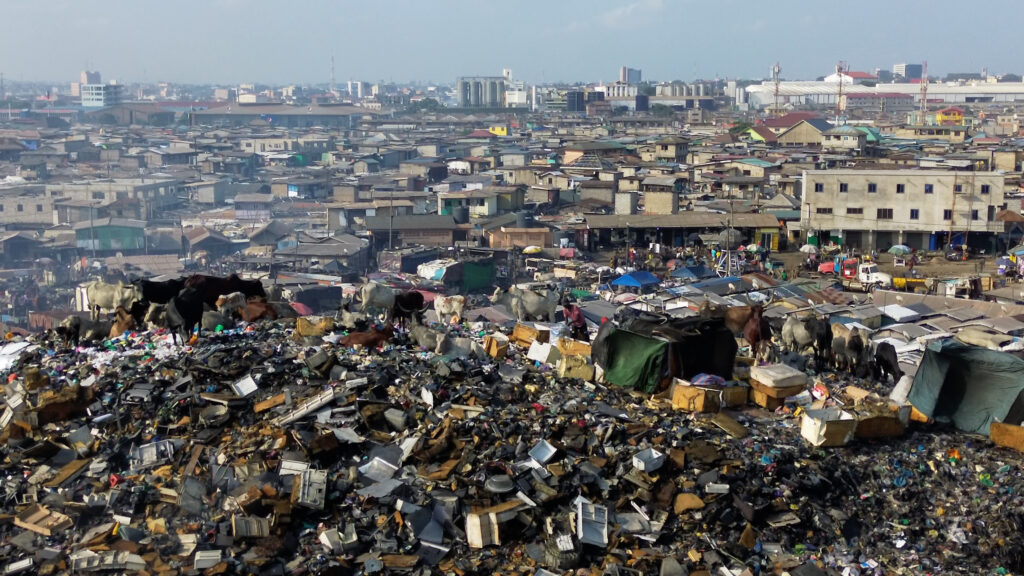
These landfills, both e-waste and traditional, are not only a threat to the local environment, but also pose a health risk to those who live and work near them. Workers, without adequate protective equipment, inhale toxic fumes and handle hazardous substances, such as mercury, lead and cadmium, which can cause serious long-term health problems. The impact is not limited to the workers; nearby communities also suffer the consequences of soil and water contamination. The correct management of this electronic waste must be under strict protection and guarantee above all the safety of workers, citizens and the environment.
Impact of electronic waste on the environment
E-waste has become an environmental problem of major proportions. It’s not just about getting rid of our old devices, but about the impact they have on the environment when they are not properly managed.
To visualize this impact, let’s consider some data: a single fluorescent light tube can pollute up to 16,000 liters of water, while a nickel battery (common in cell phones) can affect up to 50,000 liters of water or a television would pollute 80,000 liters more. To keep in mind, some of the most polluting e-waste today are electronic cards, fluorescent lamps, desktop and laptop computers, printers, video cameras, monitors, televisions, cell phones and audio equipment.
Every time we dispose of an electronic device, we release toxic heavy metals into the environment. These pollutants not only affect aquatic ecosystems, but can also enter the food chain, posing a threat to human health.
At Sircat we offer the WEEE Management service designed to address the environmental challenges linked to the rapid technological evolution and increasing obsolescence of electronic devices. We offer comprehensive solutions with the aim of ensuring maximum recovery of materials and that they can be reused, fully committed to circularity.